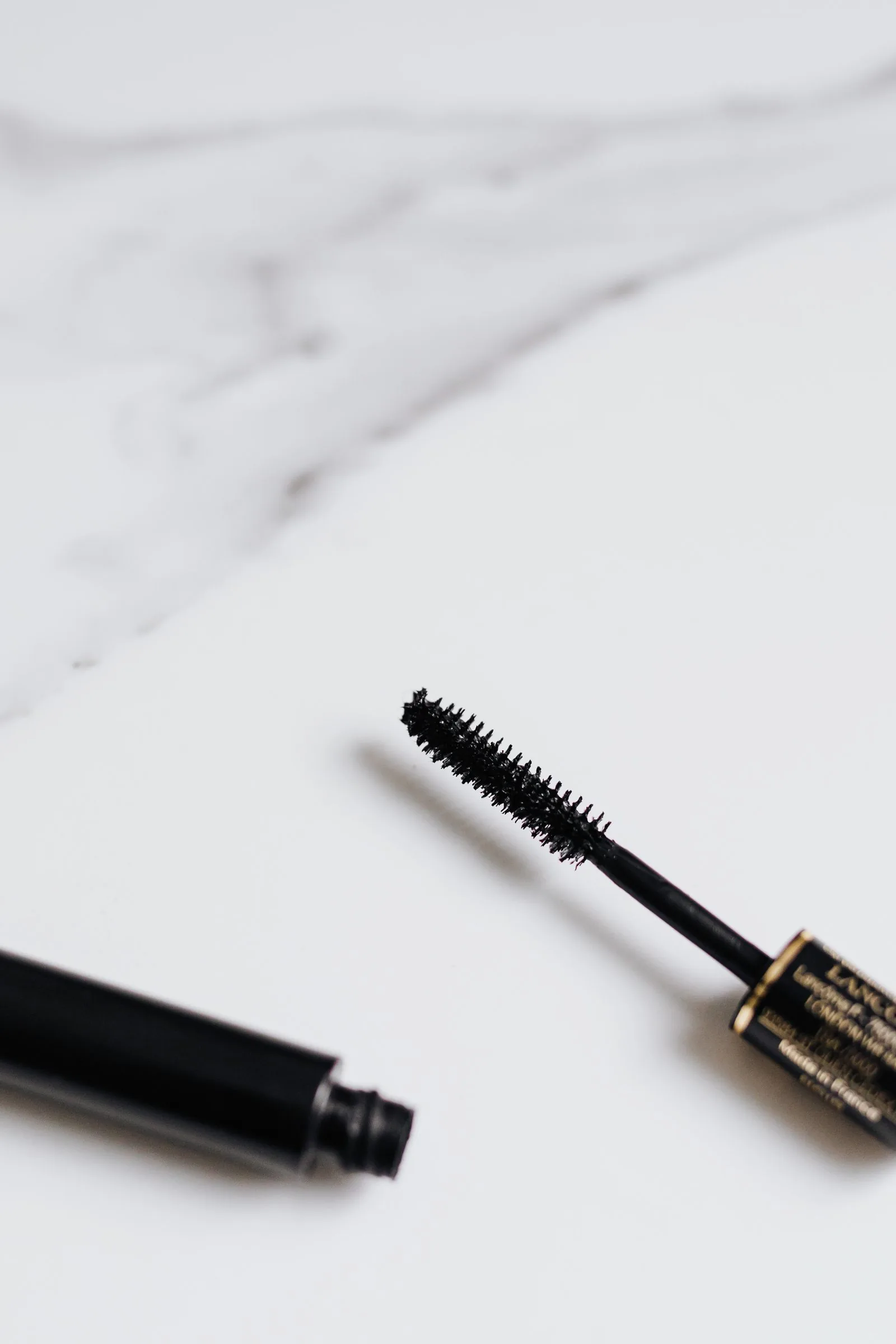
The best mascara for contact lens wearers for most people is Clinique High Impact Mascara: Clinique lists it as ophthalmologist tested, safe for contact lens wearers, and free from fragrance and oil, which matches the advice lens makers give. If you want a cheaper drugstore pick, Almay Thickening Mascara carries the same ophthalmologist-tested label at a lower price. If flakes are your main problem, blinc’s tubing mascara is the one built around not flaking at all.
The “safe for contact lens wearers” line on a tube is a starting point, not a guarantee. Below we checked five mascaras against what the American Academy of Ophthalmology (AAO), the FDA and contact lens maker CooperVision say actually causes trouble for lens wearers: flakes, fibers, oil, fragrance and waterproof formulas.
We may earn a commission when you buy through links on this page, at no extra cost to you. As an Amazon Associate we earn from qualifying purchases.
Why mascara matters more when you wear contacts
The AAO explains the risk plainly: makeup that flakes into the tear film increases irritation, and if particles get between the contact lens and the cornea, they can scratch it and may lead to infection. A scratched cornea can, in rare cases, turn into a corneal ulcer. That is why a mascara that flakes by mid-afternoon is a bigger deal for you than for someone without lenses.
CooperVision’s guide for lens wearers gets more specific about mascara. It recommends:
- Avoid fiber or “lash-extending” mascaras, because they can shed micro-flakes into the eye.
- Avoid waterproof mascaras, because they can’t be rinsed out with water and can stain soft contact lenses.
- Look for hypoallergenic, oil-free and fragrance-free formulas.
- Don’t brush all the way to the lash root, and don’t leave clumps, which can flake off.
One caveat on labels: the FDA says there are no federal standards or definitions for “hypoallergenic,” and the term means whatever a particular company wants it to mean. “Fragrance-free” and “for sensitive skin” aren’t federally defined either. So we treated those words as manufacturer claims and looked at the ingredient list and removal method too.
How we chose
We did not test these mascaras ourselves. We started from products whose manufacturer or Amazon listing explicitly says they are suitable for contact lens wearers, then checked each one against the CooperVision and AAO points above using the brand’s own product page, the Amazon listing and owner reviews at Amazon, Walmart, Target and Sephora. Ratings are quoted only where we saw the number on the listing, with the date we checked it (October 2026). Prices change often, so we link to the current listing instead of quoting them.
Comparison table
| Mascara | Lens-wearer claim (maker) | Oil-free? | Fragrance-free? | Waterproof? | How it comes off | Amazon rating (Oct 2026) |
|---|---|---|---|---|---|---|
| Clinique High Impact | Ophthalmologist tested, safe for contact lens wearers | Yes (listed “free from oil”) | Yes | No | Eye makeup remover | 4.4/5, 8,100+ ratings |
| Almay Thickening | Ophthalmologist tested, suitable for contact lens wearers | Not claimed | Yes | No (waterproof version sold separately) | Mild soap or remover | Not shown in our check |
| blinc Original Tubing | Ideal for sensitive eyes and contact lens wearers | Yes (maker says oil-free) | Not stated | Water-resistant tubes, no remover needed | Warm water + gentle pressure | 3.7/5, 4,400+ ratings |
| Neutrogena Healthy Lengths | Ophthalmologist tested, for sensitive eyes and contact lens wearers | No (contains olive oil) | Yes (current maker page) | No | Oil-free remover or soap and water | Not shown in our check |
| La Roche-Posay Toleriane Waterproof | Suitable for contact lens wearers | No oils listed, but wax-heavy | Not stated on listing | Yes | Remover; owners report it is hard to remove | 4.0/5, 1,000+ ratings |
1. Clinique High Impact Mascara: best overall
Clinique’s product page lists High Impact as ophthalmologist tested, safe for sensitive eyes and contact lens wearers, allergy tested, and free from fragrance, oil, parabens and phthalates. That covers more of CooperVision’s checklist than any other mascara here. The soft fiber brush (meaning the bristles, not fibers in the formula) is designed to comb and separate lashes, which helps you avoid the clumps that later flake off.
Who it’s for: daily lens wearers who want buildable volume and length from a brand that applies the same eye-safety claims to all of its eye makeup.
Who should skip it: anyone shopping strictly on price, or anyone who needs a mascara that survives swimming.
Pros
- Oil-free and fragrance-free per Clinique, which is what CooperVision recommends for lens wearers.
- Ophthalmologist tested and allergy tested.
- Buildable from natural to dramatic, so you can stop at one coat on sensitive days.
- 4.4/5 from 8,100+ Amazon ratings (Oct 2026), the largest rating pool in this list.
Cons
- Department-store price, well above the drugstore picks.
- Not waterproof, so it can run if your eyes water a lot.
- Clinique recommends letting it dry between coats to avoid clumping, which adds time.
2. Almay Thickening Mascara: best drugstore pick
Almay labels this mascara hypoallergenic, fragrance free and ophthalmologist tested, “meaning it’s suitable for sensitive eyes and contact-lens wearers.” The formula contains aloe and vitamin B5, and Almay sells it in three shades plus a separate waterproof version. Lens wearers should stick to the regular one.
Owner reviews on Walmart and Target mention it not irritating sensitive eyes and coming off with mild soap. The negative reviews are about texture: some buyers found tubes dry or clumpy, and one long-time user on Target felt the formula had changed and left the eye area dry and irritated. That is worth knowing if you have bought it before and a new tube behaves differently.
Who it’s for: lens wearers on a budget who want thicker-looking lashes from a brand built around hypoallergenic eye makeup.
Who should skip it: people with very fine, sparse lashes; several owners say the wet formula sticks thin lashes together.
Pros
- Fragrance free and ophthalmologist tested per Almay.
- Non-waterproof, so it comes off without heavy rubbing.
- Low drugstore price, so replacing it every three months (FDA and AAO advice) costs little.
Cons
- Not marketed as oil-free.
- Mixed reports on clumping and dry tubes.
- Some reviewers report smudging under the eye after a few hours.
3. blinc Original Tubing Mascara: best if flakes bother you
Most mascaras are a paint that coats lashes. blinc works differently: it forms tiny water-resistant “tubes” around each lash. According to the Amazon listing, it is oil-free, can’t run, smudge or flake, and needs no makeup remover. You take it off with warm water and gentle pressure, and the tubes slide off. blinc says this cuts down on the rubbing and harsh removers that irritate eyes, and calls it ideal for contact lens and eyeglass wearers.
Because flakes getting under the lens is the main risk the AAO describes, a mascara designed not to flake is a logical fit. Keep in mind that tubing is a different finish: it looks more natural and less dramatic than a volumizing paint mascara.
Who it’s for: lens wearers whose eyes get gritty by afternoon, and people who want to skip eye makeup remover entirely.
Who should skip it: anyone who wants big volume. The rating is also the lowest here, so expect mixed results.
Pros
- Designed not to flake, smudge or run.
- Oil-free per the maker.
- Removes with water and fingertip pressure, with no remover near the eye.
- Doesn’t transfer onto glasses lenses, per blinc, which helps if you switch between contacts and glasses.
Cons
- 3.7/5 from 4,400+ Amazon ratings (Oct 2026), the weakest score in this list.
- Subtle, natural finish rather than dramatic volume.
- You’ll see little tubes in your hand when removing it, which surprises first-time users.
4. Neutrogena Healthy Lengths Mascara: best for length on a budget
Neutrogena describes Healthy Lengths as dermatologist and ophthalmologist tested, gentle for sensitive eyes and contact lens wearers, fragrance-free and formulated without mineral oils. The formula does contain olive oil and vitamin E, so it is not oil-free in CooperVision’s sense. Weigh that if oil-based products have bothered your eyes before.
Target reviewers describe it as clump-free and good for contacts but light on volume. A few long-time buyers say a recent batch felt drier and clumpier than they remembered. One older Target Q&A answer stated the formula contained fragrance; Neutrogena’s current product page lists it as fragrance-free, so check the ingredient list on the tube you receive.
Who it’s for: lens wearers who want length and separation rather than volume, at a drugstore price.
Who should skip it: anyone strictly following an oil-free rule.
Pros
- Ophthalmologist tested, labeled for contact lens wearers.
- Fragrance-free and dye-free per Neutrogena’s current page.
- Removes with an oil-free remover or soap and water, per Target’s listing.
Cons
- Contains olive oil.
- Owners say it adds little volume.
- Some reviewers report it smudges with tears or humidity.
5. La Roche-Posay Toleriane Waterproof: only if you need waterproof
This one breaks CooperVision’s “avoid waterproof” rule, so we’re including it with a warning. The Amazon listing calls it suitable for contact lens wearers, allergy tested and formulated for sensitive eyes, with texturizing waxes to define and separate lashes. It makes sense for one situation: you wear contacts and need a mascara that survives tears, sweat or a pool, and regular mascaras have irritated your eyes.
The removal reviews are the reason for caution. Several Sephora UK reviewers said they love the regular Toleriane but found the waterproof version very hard to remove, and one said she scratched her eye trying. Hard removal means more rubbing near the eye, which is what lens wearers should avoid. If you buy it, use a remover made for waterproof makeup and keep it out of your eyes, as the AAO advises for any remover.
Who it’s for: lens wearers who need water resistance for a specific day, such as a wedding or a beach trip.
Who should skip it: anyone wearing soft lenses daily. CooperVision warns that waterproof mascara can stain soft contact lenses.
Pros
- Labeled suitable for contact lens wearers and allergy tested.
- Holds up to tears and humidity.
- 4.0/5 from 1,000+ Amazon ratings (Oct 2026).
Cons
- Waterproof, so it goes against lens-maker advice for everyday wear.
- Many owner reviews describe it as hard to remove.
- Some reviewers say the small brush clumps lashes.
How to pick: match the mascara to your lens problem
Start with the problem you actually have, because no single label covers all of them.
- Your eyes feel gritty by afternoon: that usually means flakes. Choose blinc, or Clinique with one thin coat that stays clear of the lash roots.
- Your eyes sting or itch soon after you apply it: look for fragrance-free and oil-free together. Clinique is the only pick here that claims both. The AAO also suggests adding one new product at a time so you can tell which one causes a reaction.
- You’re on a budget: Almay for thickness, Neutrogena for length. Cheap tubes make it easier to follow the three-month replacement rule.
- You need waterproof for one occasion: La Roche-Posay, and plan your removal. For daily wear, go back to a washable formula.
- You wear lots of eye makeup every day: CooperVision suggests considering daily disposable lenses, so you start each day with a fresh, residue-free pair. Ask your eye doctor.
Application and removal habits that matter as much as the formula
These steps come straight from CooperVision, the AAO and the FDA:
- Wash your hands, then put your soft lenses in before makeup. CooperVision notes one exception: hard (rigid) lens wearers insert lenses after makeup, carefully, so they don’t smear the lens.
- Keep the wand away from the very base of the lashes.
- Don’t leave clumps. If lashes stick together, don’t separate them with anything sharp; the AAO warns that’s an easy way to scratch your eye. A curler used before mascara helps; see our guide to the best eyelash curler for hooded eyes.
- Never apply mascara in a moving vehicle (FDA and AAO).
- Remove all mascara at night. The AAO suggests a clean cotton swab along the lash base for the last bits, and rinsing remover off the lids completely.
- Replace mascara three months after purchase, don’t add water or saliva to a dried tube, and don’t share it (FDA).
If clumping is your bigger issue than sensitivity, our best non-clumping mascara guide goes deeper on brush shapes and formulas.
If your eye stays red, painful or irritated, wash the makeup off and contact your eye doctor, as CooperVision and the FDA advise. Throw out any eye makeup you were using when you got an eye infection.
FAQ
Can you wear mascara with contact lenses?
Yes. CooperVision’s advice is to put soft lenses in first, then choose a non-waterproof, non-fiber mascara that is oil- and fragrance-free, and keep it off the lash roots.
Is waterproof mascara bad for contact lens wearers?
CooperVision recommends avoiding it because it can’t be rinsed out with water and can stain soft lenses. If you need it for a day, use a remover made for waterproof makeup and keep it out of your eyes.
Does “hypoallergenic” mean a mascara won’t irritate my eyes?
No. The FDA says there is no federal definition of “hypoallergenic” and companies don’t have to prove the claim. Check the ingredient list, and introduce one new eye product at a time.
Are fiber or lash-extending mascaras safe with contacts?
CooperVision advises lens wearers to avoid them because they can shed micro-flakes into the eye. The “fiber brush” on Clinique High Impact refers to the bristles, not fibers in the formula.
How often should I replace mascara if I wear contacts?
The FDA and AAO both say to throw mascara away three months after purchase, and right away if you develop an eye infection while using it.
Sources
All checked October 30, 2026.
- American Academy of Ophthalmology, Eye Makeup Safety Tips: aao.org/eye-health/tips-prevention/eye-makeup-safety-tips (flakes under lenses, removal, 3-month rule, one product at a time)
- American Academy of Ophthalmology, How to Use Cosmetics Safely Around Your Eyes: aao.org/eye-health/tips-prevention/eye-makeup (don’t separate lashes with sharp objects)
- FDA, Eye Cosmetic Safety: fda.gov/cosmetics/cosmetic-products/eye-cosmetic-safety and Cosmetics Safety Q&A: Eye Cosmetic Safety (replacement, no water or saliva, no application in vehicles)
- FDA, “Hypoallergenic” Cosmetics: fda.gov/cosmetics/cosmetics-labeling-claims/hypoallergenic-cosmetics
- CooperVision, Makeup for Contact Lens Wearers: coopervision.com/blog/makeup-and-contacts (fiber, waterproof, oil-free, lens-first order, daily lenses)
- CooperVision, How Makeup Users Can Prevent Eye Health Problems: coopervision.com/blog/how-makeup-users-can-prevent-eye-health-problems (rigid lens exception)
- Clinique, High Impact Mascara product page: clinique.com/products/high-impact-mascara (eye safety claims, free-from list); Amazon listing ASIN B001VD3YV2 (4.4/5, 8,145 ratings)
- Almay, Thickening Mascara product page: almay.com/eyes/mascara/almay-thickening-mascara; Target listing and reviews (TCIN 12700114); Walmart reviews; Amazon listing ASIN B000052ZC4
- blinc Original Tubing Mascara, Amazon listings ASIN B002A9JONI (3.7/5, 4,451 ratings) and B00U1MIB5I (product description, removal method)
- Neutrogena, Healthy Lengths Mascara product page: neutrogena.com/products/makeup/healthy-lengths-mascara/6843296; Target listing and reviews; Amazon listing ASIN B00ADRGV26
- La Roche-Posay Toleriane Waterproof Mascara, Amazon listing ASIN B07HWJ49WH (4.0/5, 1,035 ratings; contact lens claim); Sephora UK customer reviews